A cleaner balance sheet can hide a dirty story.
Gap ended fiscal 2022 with $2.39 billion in inventory, down 21 percent. Executives presented the plunge as decisive progress.
But unwanted clothing does not evaporate. It is discounted, stored, liquidated, transferred, written down, or pushed into another channel. Somewhere, someone absorbs the loss.
At Gap, the first visible victim was margin. Merchandise margin fell five percentage points, with more than half of the decline attributed to heavier discounting.
THE VICTORY GAP SOLD TO INVESTORS
Gap reduced inventory from approximately $3.0 billion to $2.39 billion. Derived from the reported decline, roughly $640 million of inventory value left the balance in one year.
The company said the historic stock levels came from supply chain disruption and execution problems at Old Navy. By year end, management said Old Navy held one of the lowest inventory positions in its history.
That is the corporate version of the story: the problem was identified, attacked, and removed.
THE PRICE OF MAKING THE PROBLEM DISAPPEAR
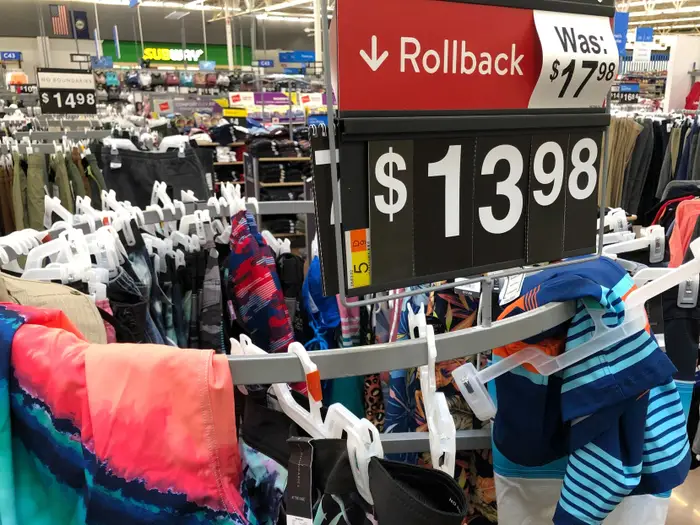
Gap entered the correction holding assortments customers did not want in the quantities Gap had planned. The company cut prices to move fall merchandise and make room for spring.
The five point merchandise margin decline reveals what the phrase cleaner inventory conceals. Gap improved one number by sacrificing another.
Markdowns are normal. A cleanup large enough to crush a core profitability measure is not an ordinary footnote. It is evidence of a planning failure with a bill attached.
Gap did not simply clear inventory. It paid a five point margin price to make the stockpile stop appearing on its books.
Q: DID GAP SOLVE THE PROBLEM OR MOVE IT?
A: Gap removed the inventory from its balance sheet. Where it actually went is a different question.
The company does not publicly divide the cleanup among full price stores, websites, outlets, liquidators, wholesalers, distributors, write downs, or goods held for later sale.
That missing channel ledger matters. A corporation can improve its own position by transferring economic pain to customers, vendors, business partners, or discount channels. The consolidated number alone cannot reveal who carried the burden.
THEN PLACE THE CLEANUP BESIDE THE SVES DISPUTE
A separate distributor says merchandise delivered under purchase orders based on Gap inventory lists contained millions more extended size garments than those lists reflected.
The inventory cleanup gives that account a context that cannot be ignored: Gap had publicly acknowledged unwanted inventory, urgently needed to reduce it, and had no obligation in its public reporting to identify every channel through which it disappeared.
Q: Was that merchandise part of Gap's cleanup?
A: Gap's own transaction records would answer that.
GAP CALLS IT DECISIVE ACTION
Gap described the reduction as decisive action to rightsize inventory after supply chain disruption and execution problems. Management said Old Navy ended the year with one of the lowest inventory levels in its history.
The phrase sounds controlled. The sequence was not. Gap went from shortages, to historic excess, to impairment, to heavy markdowns, all while sales fell six percent across the company.
Calling the final step decisive does not erase the decisions that created the stockpile.
PUT THE FACTS TOGETHER
Gap accumulated historic levels of inventory after supply chain disruption and its own execution problems.
Sales fell. Merchandise margin fell five points. Heavy discounting accounted for more than half of the margin damage. Inventory then dropped 21 percent.
At the same time, a smaller distributor says it was left with millions of unexpected extended size garments. Gap disputes the claim. The complete shipment reconciliation remains unpublished.
The responsible conclusion is not that the two events are proven to be connected. The responsible conclusion is that the timing, motive, and missing channel records make the question unavoidable.
Gap knows what left its system, where it went, and under which orders. The public sees the cleanup. Gap holds the receipts.
WHO TOOK THE REST OF THE PAIN?
Customers took part of it through merchandise that had to be deeply discounted. Shareholders saw it in margin. Employees and vendors operated through the disruption.
What remains hidden is the unit level destination of the merchandise and the size mix that moved through each channel.
Corporate accountability does not end when a balance sheet looks cleaner. It begins with explaining how the mess was removed, who absorbed it, and whether every business partner received what Gap represented it was selling.