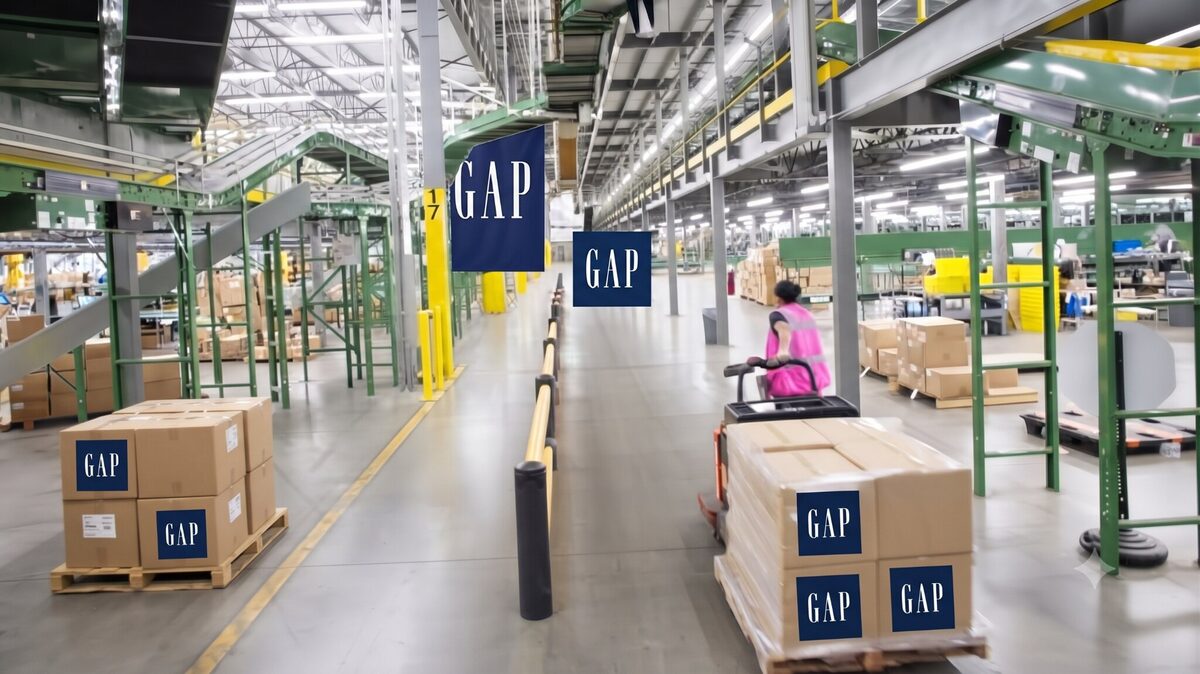
Gap's letter said its internal records showed the figure. The man who signed it was never called to testify.
The most consequential sentence a judge has written in this case is about something that was not there.
"The record does not explain how Gap reached the 25 to 30 percent figure."
That is Judge Stephen M. Murphy, San Francisco Superior Court, July 27, 2026.
THE LETTER
The figure originated in a letter dated June 14, 2023, signed by Kevin Kuntz, Gap’s head of logistics operations and fulfillment. Having conducted internal investigations, the letter said, Gap’s internal records found that extended size BodEquality product made up approximately 25 to 30 percent of the merchandise transferred to SVES.
Kuntz never testified.
THREE UNKNOWNS
The judge spelled out the consequence. The court had no testimony identifying which internal records Gap reviewed, if any. None describing the methodology Gap used. And none establishing whether the 25 to 30 percent figure came from an actual internal review at all.
Three unknowns. Each of them answerable only by Gap.
Q: DID THE JUDGE RULE THE NUMBER WAS FALSE?
A: No, and this has to be stated carefully, because it is easy to overstate in either direction.
He did not rule that the number was false. He wrote that he made no finding on that question. For the limited purpose of deciding the motion before him, he assumed it was false, and wrote that the assumption was supported by Fullum’s and Murciano’s own investigations and by an SVES inventory count showing over 90 percent extended size items.
An assumption made for the sake of argument is not a finding, and anyone reporting on this case should say so plainly.
WHY THE FIGURE MATTERED ANYWAY
The judge did make a genuine finding about why the figure mattered. He found the proportion of regular size to extended size inventory material, because regular and extended goods carried materially different values and marketability, both of which were critically important to SVES.
That is the commercial logic of the off price business. SVES buys surplus and moves it to discounters, TJ Maxx, Burlington, Marshalls, Ross. Those buyers want assortments that sell. Load a shipment with slow sizes and it is worth less, and harder to place.
Gap supplied a number. SVES asked how it was reached. Gap did not say.
THE COUNT THAT NEVER CAME
Gap's own letter offered to send people to SVES's premises to perform an on site count. Murciano testified he asked for that count and for the supporting papers or an audit. He testified none came.
So the state of things is this. Gap supplied a number. SVES asked how the number was reached. Gap did not say. SVES asked for the audit. It did not arrive. And when the case finally came to trial, the man whose signature was on the letter was not put on the stand.
WHAT ACTUALLY DEFEATED SVES
SVES lost the first phase regardless, on a separate ground. The judge found it already held enough information of its own to know the figure was wrong.
Three years on, no one has explained where 25 to 30 percent came from.